Saturday, 10 September 2016

Zand, Zeep and Soda


Zand, Zeep and Soda has the sounds and rhythm of a nursery rhyme and could have been used in a story told by Dr Zuess. But this Zand, Zeep and Soda came straight from my mother's kitchen and was used by her eighty years ago. It was a standard kitchen set and at the time the soft green colour was popular and easily accessible.

The shade of green remained in vogue for many years with matching pot, pans, containers, breadboxes, colanders and ladles.


Originally the set came with a rack but has been misplaced through the years by numerous moves. 


We lived at the dunes in a small village along the North Sea and the fine sand was readily available.  The sand was used for heavy duty pot scrubbing and stained floors. Green Soap was a soft soap, which is still around today and readily available on the supermarket shelves. It was a general purpose cleaner and was used for most everything from kitchen, bathroom, floors, windows to laundry. 


The non-perfumed soap was gentle enough to wash your hair with and is most likely the base of many shampoos. Soda was also used for cleaning and laundry and even as toothpaste. Looking down the cleaning product aisle at the supermarket, I see some clever marketing and some expensive chemical concoctions which do the same thing. 


These three containers, a  reminder to return to just the basics.

Friday, 9 September 2016

Laughing Men


Not far from the previous location of the  Englesea Lodge are the 14 patinated bronze sculptures from Beijing artist Yue Minjin. Its location is a small triangular space called Morton Park.


They were temporary on display as part of the Vancouver International Sculpture Biennale, which exhibits international contemporary works in public spaces. They had become permanent through time as a donation to the city of Vancouver by Chip and Sharon Wilson on August 11, 2012. 


The name changed in the meantime, from the Path of God to A-maze-ing Laughter.

Although the oversized mouths of these sculptures are in a laughing position, the body language reflects differently, making them creepy. One wonders if they are practising a laughing exercise and  what are they laughing about? 

A far distance from this little park, the artist seems to be the only one genuinely laughing en route  to the bank. 

Thursday, 8 September 2016

Vincent

I cannot walk past a sunflower without pausing to look at the flower and its stalks and think of Vincent van Gogh. He painted a dozen different versions of Sunflowers in three series. There were arrangements of clippings on the floor, some of fifteen in a vase and other just three. Within each set, the layouts are rather similar. Innovations in manufactured pigments in the nineteenth century brought vibrant new colours, such as chrome yellow, making it possible for Van Gogh to capture the intensity of the sunflower petals.


His first series was done in 1887 after he had left Holland for Paris. These paintings showed the simplistic beauty of sunflower clippings, and at least two of the pieces were intended to decorate his friend Paul Gauguin's bedroom. Seven paintings in his two different Sunflowers-in-Vase series painted in Arles in southern France during 1888 and 1889.


Gauguin joined Van Gogh in Arles and they shared a studio, that image reflected in the painting of The Yellow House. Together they had hopes of starting up a new artist colony in that area. 

Self portrait of Paul Gauguin a gift to Vincent. 

In preparation for Gauguin's arrival Vincent painted the remainder of the Sunflowers-in-Vase series for display in their studio. Their relationship lasted two months before each going in a different direction. Gauguin left for Polynesia leaving Vincent in Arles. Vincent and Paul never saw each other again.


In just over a decade Vincent produced 860 oil paintings and more than 1300 watercolours, drawings, sketches and prints. The Van Gogh Museum in Amsterdam has the world's largest collection of his works, comprised of 200 paintings, 400 drawings, and 700 of his letters.

Vincent van Gogh was born on 30 March 1853 near Breda in the southern Netherlands. He died of gunshot wounds at the age of 37 on 29 July 1890 in Arles, the south of France. His reason for suicide remains unclear, like pages torn from a book; there is only theory and speculation. 


My inspired illustration of sunflowers 2015

Tuesday, 6 September 2016

The Redheads

Vincent van Gogh was born near Breda and to me the most famous redhead.


It is Redhead days in Breda, the Netherlands. This free event takes place the first week in September and all redheads, around the world, are welcome.

Red hair occurs naturally in 1-2% of the human population. It occurs more frequently, 2-6% in people of northern or western ancestry and less frequently in other populations.

Queen Elizabeth I was a redhead and during her reign, red hair was in fashion and desired by women.


Red hair varies in shades of dark burgundy, strawberry blond, burnt orange to bright copper. It contains high levels of the reddish pigment called pheomelanin and low levels of eumelanin, the dark pigment.


We associate it with fair skin colour, freckles and sensitivity to ultraviolet light.


 Most have more luminous eyes in shades of grey, blue, green and hazel.

Red hair can darken over time and becomes more brownish and loses some of its vividness.
In some Asian countries, henna and saffron are used to capture or enhance their hair colour.


Cultural reactions have varied through time with some ridiculed others admired. 
The term redhead has been used since at least 1510.

An early artistic rendering of Mary Magdelene depicts her with long flowing red hair. The description of her hair was never mentioned in Scriptures and could cause by the ageing pigment in the paint.


But I have my two redheads, which are my favourites.

Sunday, 4 September 2016

Marine Gateway


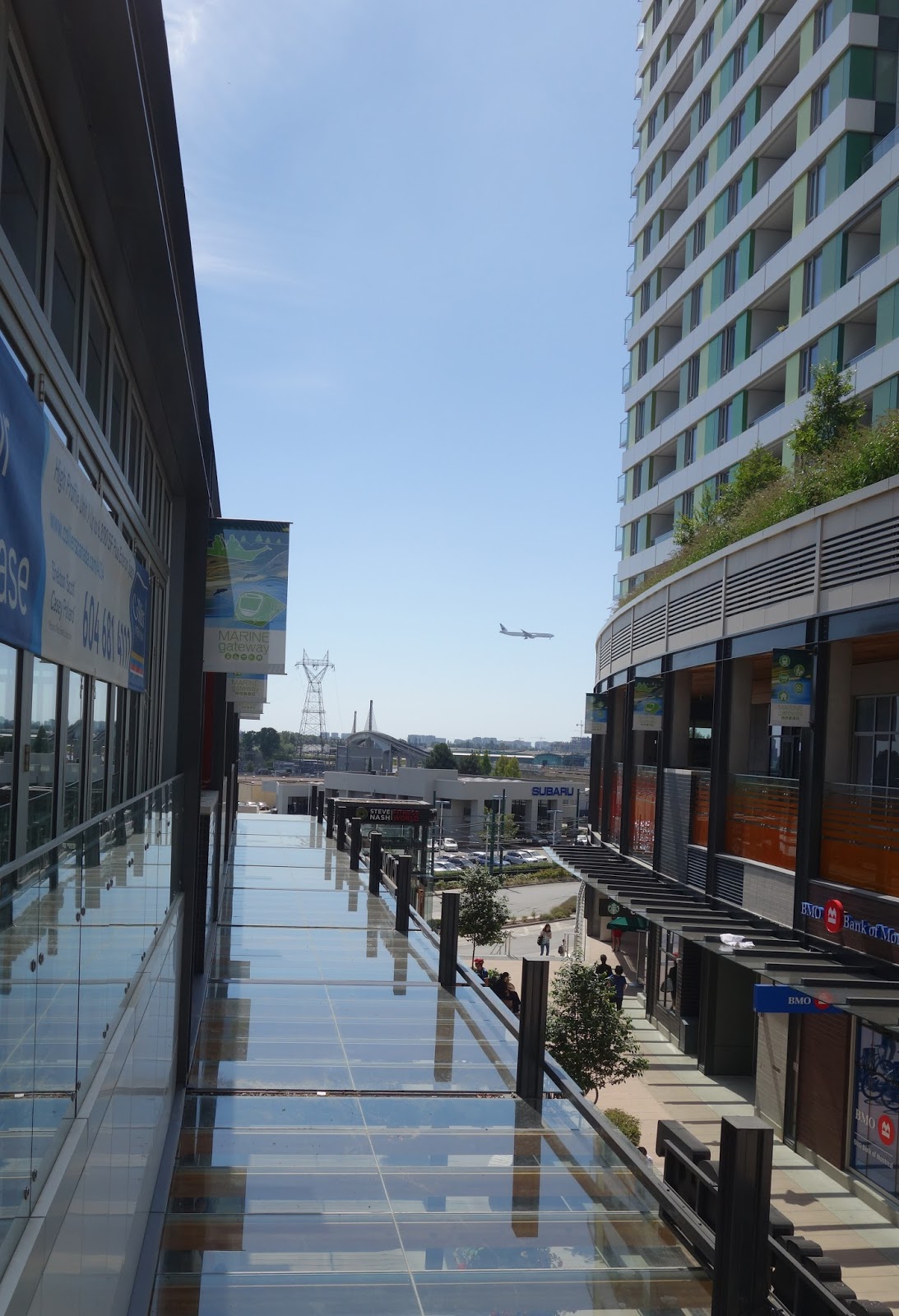
The spirit of Canada’s longest interurban railway lives on in our rapid transit of today.  

Marine Drive Station on the Canada Line is where the tracks emerge from the long underground tunnel originating at the harbour front at Terminal Station. Once emerged it reaches high above the ground to its platform with the bus exchange below which is well named Interurban Way. 

Above the Marine Drive Station are high residential high rises. The area now functional of both residential and commerce with easy access to the shops as well as the 29 story apartment building from the main entrance to the Skytrain station
There are banks, cinema, drugstore, clothing store, mattress store and well-stocked supermarket.  

With a very busy bus loop on the Interurban Way, it connects to the Canada Line to which you can to downtown, Richmond or the YVR Vancouver International Airport.  


While waiting, with pleasant spots to sit, there is no shortage of snacks and coffee. There are even a pub and liquor store for the much longer waits.


Announcements of the arrival of the quiet and driverless train into Marine Station.

Saturday, 3 September 2016

Interurban Electric Railway

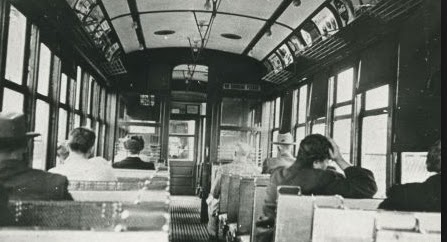
The Interurban was the electric railway system that connected outlying communities to Vancouver from 1891 until 1958. Operated by the BC Electric Railway Company, the interurban network revolutionized where people lived, worked and travelled by providing efficient, rapid transit.


One of the earliest Interurban lines ran between Vancouver and Steveston. It was knowns as the “ Sockeye Express” because it took cannery workers and canned salmon to and from the city. 

Soon it carried fresh milk, produce, strawberries, lumber gravel and much more, all from source to city.

The trams which were larger and stronger than streetcars and could reach speeds of 45mph.


By 1913, the Interurban was carrying more passengers than produce, with five major lines linking Vancouver with the Lower Mainland.


At that time trams were cheaper, cleaner and faster than horses or trains. The Interurban made commuting possible and subdivisions grew up along the lines.

The Interurban delivered thousands of people to their work and entertainment such as Vancouver theatres, the Opera, Stanley Park and Brighouse Racetrack.


With the opening of the Pattullo Bridge and more automobiles on the roads, it signalled the demise of the electric rail. 


The Era of the Interurban ended with the last tram travelling down the line to Steveston on February 28, 1958.

Friday, 2 September 2016

Baking Bread


After years aboard our yacht Sequitur, I had refined the art of baking bread. It was not that I had done this before, or a hobby of mine, but it was the result of lack of a good loaf. 

South of the United States border the variety of bread becomes sparse. What is plentiful on the shelves were hamburger buns, hot dogs buns, sweet raisin buns, sticky cinnamon buns and gooey white bread. They all come with a very long shelf life. 

I decided to try the no-knead bread from NY times. After having success with the plain loaves I got more adventurous and made some small changes.


Adding cranberries and pecan nuts to one, raisins and currants to another. Garlic bread, olives with sun-dried tomatoes followed.   The exterior crust shifted from corn to sesame and cracked wheat. 

The raisin bread was Michaels favourite and we called it Officers Bread. He had been a Naval Officer and that was what they enjoyed onboard, but found the freshly baked Sequitur bread so was much better.

    
As we sailed further down the South America coast, we found no improvement and just kept on baking. 
In warmer climates we left the bread to rise in the sheltered cockpit, it was getting too cold and we moved the yeast aroma indoors. We also switched to pizza dough and tried our hand in bagels.  

Today I still bake my bread with the few ingredients listed below. If I leave the freshly cut loaf out to long, it gets stale, a sign of no preservatives. After slicing, I freeze it immediately to enjoy with a good cup of Dutch coffee. Did I mention we baked biscotti?

For more picture view in Pinterest dining aboard Sequitur

No-knead bread

INGREDIENTS
  • 3 cups all-purpose or bread flour, more for dusting
  • ¼ teaspoon instant yeast
  • 1 ¼ teaspoons salt
  • Cornmeal or wheat bran as needed

PREPARATION

  1. In a large bowl combine flour, yeast and salt. Add 1 5/8 cups water, and stir until blended; dough will be shaggy and sticky. Cover bowl with plastic wrap. Let dough rest at least 12 hours, preferably about 18, at warm room temperature, about 70 degrees.
  2. Dough is ready when its surface is dotted with bubbles. Lightly flour a work surface and place dough on it; sprinkle it with a little more flour and fold it over on itself once or twice. Cover loosely with plastic wrap and let rest about 15 minutes.
  3. Using just enough flour to keep dough from sticking to work surface or to your fingers, gently and quickly shape dough into a ball. Generously coat a cotton towel (not terry cloth) with flour, wheat bran or cornmeal; put dough seam side down on towel and dust with more flour, bran or cornmeal. Cover with another cotton towel and let rise for about 2 hours. When it is ready, dough will be more than double in size and will not readily spring back when poked with a finger.
  4. At least a half-hour before dough is ready, heat oven to 450 degrees. Put a 6- to 8-quart heavy covered pot (cast iron, enamel, Pyrex or ceramic) in oven as it heats. When dough is ready, carefully remove pot from oven. Slide your hand under towel and turn dough over into pot, seam side up; it may look like a mess, but that is O.K. Shake pan once or twice if dough is unevenly distributed; it will straighten out as it bakes. Cover with lid and bake 30 minutes, then remove lid and bake another 15 to 30 minutes, until loaf is beautifully browned. Cool on a rack.